The Art of Truffle Season: A Guide to the World's Most Coveted Fungus
There is a moment in late autumn, when the oak forests of Périgord begin to exhale their first cold breath, that the truffle hunters emerge. They move quietly through the trees with their dogs — Lagotto Romagnolos, mostly, with their curly coats and extraordinary noses — pausing at the base of certain oaks, watching for the subtle agitation that signals something extraordinary beneath the soil.
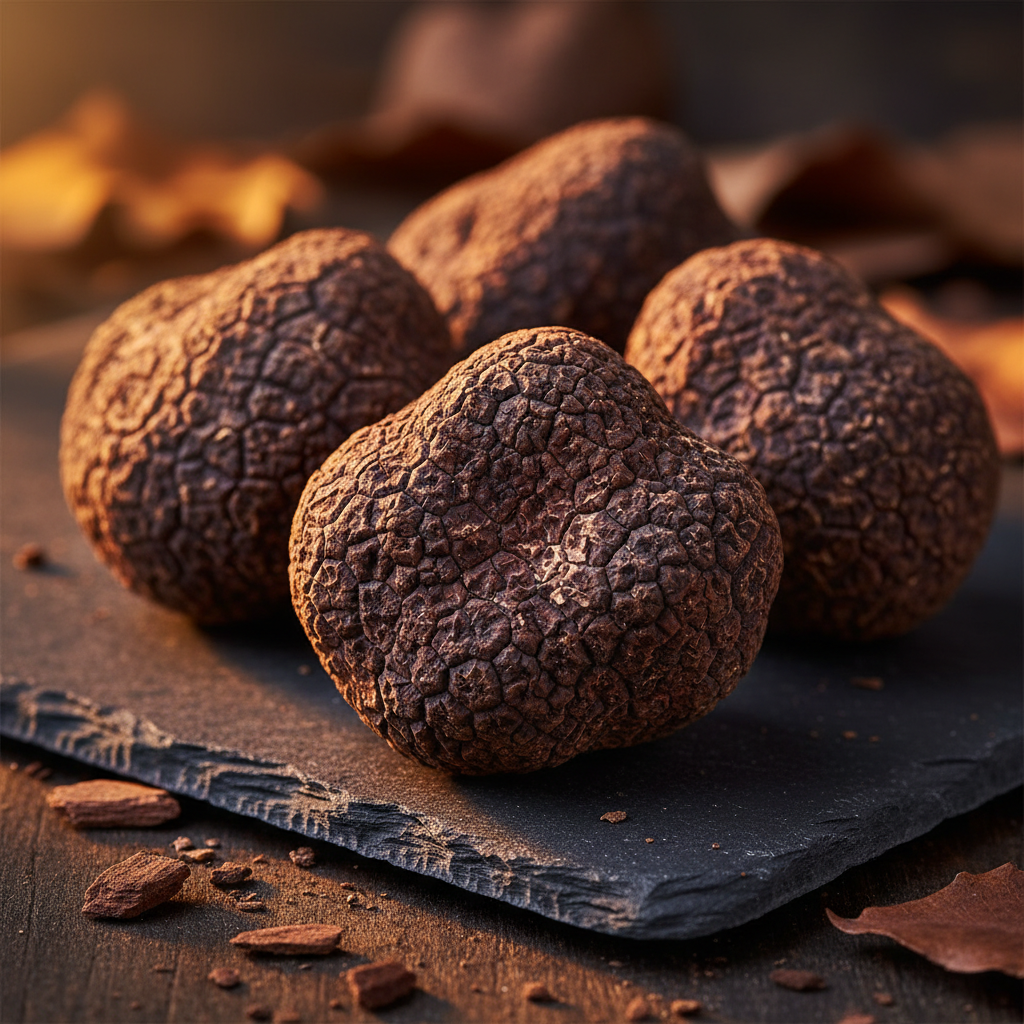
The black truffle, Tuber melanosporum, is one of the most complex flavour compounds in the natural world. Scientists have identified over 200 volatile aromatic compounds in a single specimen — a symphony of earth, musk, chocolate, and something ineffably animal that defies precise description. It is this complexity that has made the truffle the defining luxury ingredient of European haute cuisine for over three centuries.
The truffle does not announce itself. It hides beneath the earth, patient and silent, waiting for those who know how to listen.
The season is brutally short. In Périgord, the harvest runs from late November to early March, with the finest specimens appearing in January. In Alba, the white truffle — Tuber magnatum, arguably even more prized — peaks in October and November. The brevity of the season is part of what makes the truffle so compelling: it is a flavour that cannot be manufactured, cannot be extended, cannot be replicated. It exists only in its moment.
At Saffron & Co., we work directly with three truffle hunters in Périgord and two in Umbria. Our relationship with them is one of the most important we maintain — built over years of trust, mutual respect, and a shared reverence for what they do. When we include truffle in a meal kit or a private dining menu, we know exactly which forest it came from, which dog found it, and how many hours it has been out of the ground.
The question we are most often asked is: how do you use truffle at home without wasting it? The answer is simpler than most people expect. Truffle does not need to be cooked. In fact, heat diminishes its most delicate aromatic compounds. The finest way to use a fresh truffle is to shave it, at the last possible moment, over something warm and fat — a bowl of freshly made pasta with butter and Parmigiano, a soft-scrambled egg, a risotto just off the heat. The warmth releases the aromatics; the fat carries them to the palate.

About the Author
Isabelle Fontaine
Isabelle is the founder and creative director of Saffron & Co. A former food editor at Condé Nast, she has spent 15 years writing about the intersection of luxury and gastronomy.