A Week in Kyoto: How Ancient Japan Taught Me to Eat Slowly
I arrived in Kyoto in early October, when the maples were just beginning to turn and the air carried the first suggestion of autumn. I had been to Japan before — Tokyo, twice, for work — but Kyoto was different. Kyoto was the reason I had become a food writer in the first place.
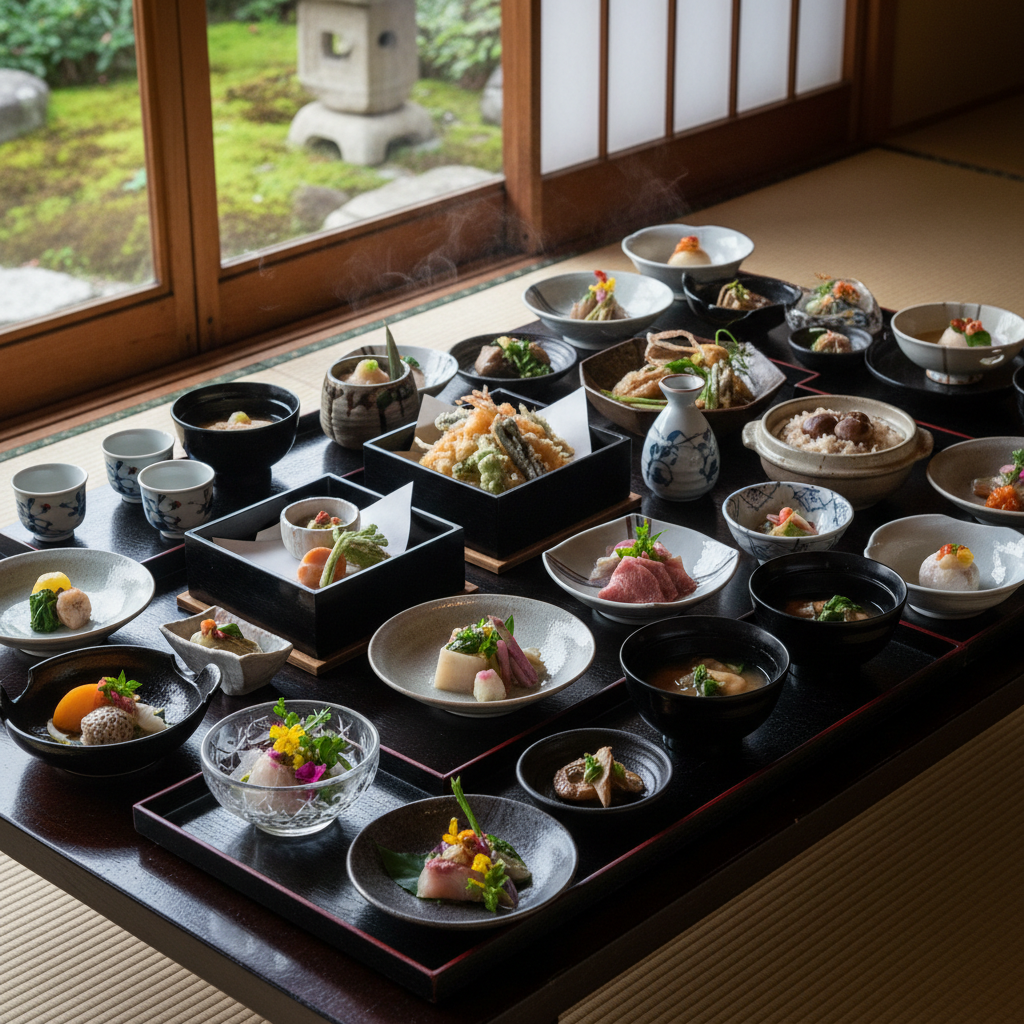
My first meal was at a kaiseki restaurant in Gion that had been operating from the same machiya townhouse for 140 years. The chef, a man in his seventies who had trained under his father and grandfather before him, served eleven courses over three hours. Each course was a meditation on a single ingredient — a single moment in the season. The first was a single slice of persimmon, barely ripe, served on a leaf from the garden. Nothing else.
In Kyoto, eating is not something you do between other things. It is the thing itself — the reason for being present, for being still.
I have eaten at many of the world's great restaurants. I have sat at tables where the cooking is technically extraordinary, where the service is impeccable, where the wine list reads like a history of civilisation. But I have rarely felt, as I did in that Gion machiya, that the person cooking for me was trying to show me something true about the world.
The week that followed was a masterclass in the philosophy of Japanese food culture — a philosophy that has no direct equivalent in the Western culinary tradition. The concept of shun — the peak moment of an ingredient's season — is not merely a culinary preference but a way of understanding time itself. To eat shun is to acknowledge that this moment will not come again, that the persimmon on your plate is perfect today and will be different tomorrow.
On my last morning, I visited Nishiki Market at 5am with Chef Hiroshi, who had been our guide throughout the week. The market was already alive — fishmongers arranging their catch, tofu makers ladling fresh silken tofu into wooden boxes, pickle vendors arranging their jars of tsukemono with the care of jewellers. Hiroshi moved through it all with the ease of a man who had done this every morning for forty years. He stopped at a stall selling fresh wasabi root and bought one, handing it to me to smell. It was nothing like the green paste I had grown up with. It was green and alive and faintly sweet, with a heat that bloomed slowly and then disappeared entirely. I stood there in the early morning light, holding a wasabi root, and understood something about food that I had not understood before.

About the Author
Isabelle Fontaine
Isabelle is the founder and creative director of Saffron & Co. A former food editor at Condé Nast, she has spent 15 years writing about the intersection of luxury and gastronomy.